We know that certain mines have different 'picking patterns' or what I called 'gem drop patterns'. That is, which crystal types drop which size gems when broken with a jeweler's pick is perfectly consistent for any given level of a given mine. Even better, these are not specific to a single mine and are unrelated to gem type. The patterns seem to be based on location, in small patches for each pattern and at various depths, and they indicate certain qualities of the mine related to metals, ss in, "with Pattern 1, RB+ gives tin, with pattern 2, it gives iron." However, these small patches are scattered over areas of at least 2000 coords across and occur on multiple levels, meaning there are likely a finite number, and thus they are extremely useful in determining mine outputs quickly. Do note, however, that not all mines with a pattern produce all possible crystals for that pattern.
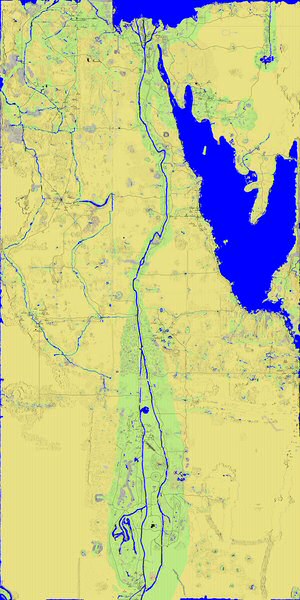
This page contains a summary of gem drop patterns, with links to fuller data for each, and a map/chart of various public mines with their pattern information (along with other things miners would likely want to know about them). You can help by: 1) making your mines public and adding them to the lower chart for inclusion on the map 2) analyzing mines' gem drop patterns and reporting them in the lower chart and on the appropriate pattern page. If you find a new pattern, make a new pattern page using this Template, and add it to the chart, assigning it the next free number. 3) going to mines with known patterns and checking each crystal type for its mineral name. It is possible for a pattern to have visually identical crystals which are two different minerals, so Mineralogy is essential! It's cheap, go get it. Also test drop outputs if the crystal which gives each size of gem is not identified, and try to identify each size of gem's crystal with BOTH a visual designation and an ore name (or sand, dirt, or limestone).
You may also wish to look at Mining and its subpages.
As exact ores are identified with mineraology, listed metals in the pattern charts (but not the map chart) will be replaced with ore names which can be crossreferrenced to the mineraology Name Chart. While slightly less simple, it will be far more accurate, particularly if it turns out (as is likely) that some of them contain secondary metals or differing amounts of their primary metals.
Gem Drop Patterns
Where a "typeA" designation appears in the chart (or the individual pattern charts), it means there are two subtypes, only one of which drops gems (and which can have different smelting yields), and they can not be indentified visually. As they are checked with Mineraology, we will be able to identify them better.
In the linked charts, a metal designation means it has been checked by smelting but not with Mineraology. The designation "metallic" means it has only been determined that it does not drop anything and thus can only be sand or a metal ore. The designation "?" means it has been seen, but neither indentified with Mineraology nor smelted.
| GDP # | Small Gems | Medium Gems | Large Gems | Huge Gems |
| GDP1 | TB- | PM- | KM- | PS- |
| GDP2 | YM+ | SB+ | YB+ | AS+ |
| GDP3 | GS+ (dirt) | TB+ (sand) | SM- (sand) | GB+ |
| GDP4 | TC+typeA | YM+typeA | KS+ | TM+ |
| GDP5 | KM+ | SS+ | ||
| GDP6 | PB+ | NC+ |
Pattern Locations/Public Mine Patterns
Abbreviation Key
- P# = pattern number
- LS = limestone
- Cu = copper
- Fe = iron
- Ag = silver
- Al = aluminum
- Pb = lead
- Sn = tin
- W = tungsten
- Sr = strontium
- SP = smelting pot
- CF = craft furnace
- AF = amalgamation furnace
- FF = fragile furnace

|
Location
Gem
L1
L2
L3
L4
L5
L6
Owner
Facilities |
| Location | Gem | L1 | L2 | L3 | L4 | L5 | L6 | Owner | Facilities |
| 950, 7300 | emerald | P6: zinc | Guardians of Osiris | CF, carts | |||||
| 950, 7320 | emerald | P6: pure zinc | ? | ? | East Fork | CF, carts | |||
| 2360, 3270 | quartz | P4 | P3 | P1 | P3 | P1 | P1 | Pheonix River Delta | CF, AF, SP, at least |
| 2240, 2250 | quartz | ? | P3: Cu, Sr | Tono | CF, FF | ||||
| 2270, 2270 | sapphire | P3 | Xiandria | ||||||
| 2500, 1475 | quartz | P2 | |||||||
| 2500, 1480 | quartz | P1 | |||||||
| 2535, 1495 | quartz | P1 | P3 | ||||||
| 2565, 1490 | quartz | P3: Ag | |||||||
| 2570, 1330 | quartz | P2 | |||||||
| 2570, 1430 | quartz | P3: Ag, Al, Pb | |||||||
| 2595, 1275 | emerald | P3: Sn, Al | Akrian | public smelter | |||||
| 2610, 1275 | quartz | P3: Sn, Al | Akrian | public smelter | |||||
| 2630, 1460 | quartz | P3: Ag, Al, Pb | |||||||
| 2650, 1460 | quartz | P3: Ag, Al, Pb | |||||||
| 2650, 1490 | quartz | P3: Ag, Al, Pb | |||||||
| 2650, 1520 | quartz | P3: Ag | |||||||
| 2670, 1420 | quartz | P3: dirt | |||||||
| 2680, 1685 | quartz | P4 | |||||||
| 2695, 1780 | ? | ? | Oasis Bar and Grill | ||||||
| 2700, 1425 | quartz | P2: dirt | |||||||
| 2700, 1705 | quartz | P2 | Oasis Bar and Grill | ||||||
| 2710, 1685 | quartz | P4 | |||||||
| 2715, 1700 | quartz | P4 | P3 | Oasis Bar and Grill | |||||
| 2735, 1705 | quartz | P1 | P3 | Oasis Bar and Grill | |||||
| 2740, 1490 | quartz | P1: dirt, Cu | |||||||
| 2740, 1655 | quartz | P4 (bothTC+, YM+B) | |||||||
| 2740, 1675 | quartz | P4: Fe, Cu, LS (TC+A) | P1:dirt | P4 | 3 SP, CF | ||||
| 2740, 1685 | quartz | P4: Fe, Cu, LS (TC+A) | P1:dirt | P4 | 3 SP, CF | ||||
| 2740, 1745 | quartz | P2 | |||||||
| 2750, 1425 | quartz | P2: dirt | |||||||
| 2770, 1500 | topaz | P1: Cu, LS | P3 | P2 | |||||
| 2770, 1530 | quartz | P1: dirt, LS, Cu | |||||||
| 2770, 1565 | ruby | P2: LS, dirt | P2: LS, dirt | ||||||
| 2770, 1610 | sapphire | P2: LS, dirt | P2: LS, dirt | ||||||
| 2770, 1660 | diamond | P1: LS | P3 | ||||||
| 2780, 1690 | quartz | P1: LS | |||||||
| 2800, 1425 | quartz | P1 | P3 | ||||||
| 2800, 1535 | quartz | P5: LS | |||||||
| 1126, 6737 | sapphires | P2 | |||||||
| 1432, -6321 | diamond | ||||||||
| 1861, 1783 | Ruby | P2: Very Poor Iron | The Oasis Hideout | Very Good Ruby and Dirt Producer |
Contributors: Jataka, Squatt, Leetah, and Nefer-Bast
Please note that I have renumbered the 2 patterns previously listed here to be consistent with my charts, as it was much less error-prone than trying to edit the lower chart, and I have by far the most data on this right now. Apologies for the map being so biased to my home area, but I don't imagine that surprises anyone.
Any reason we are not putting this under Mining?
Oh, and btw, I'm female.- Nefer-Bast